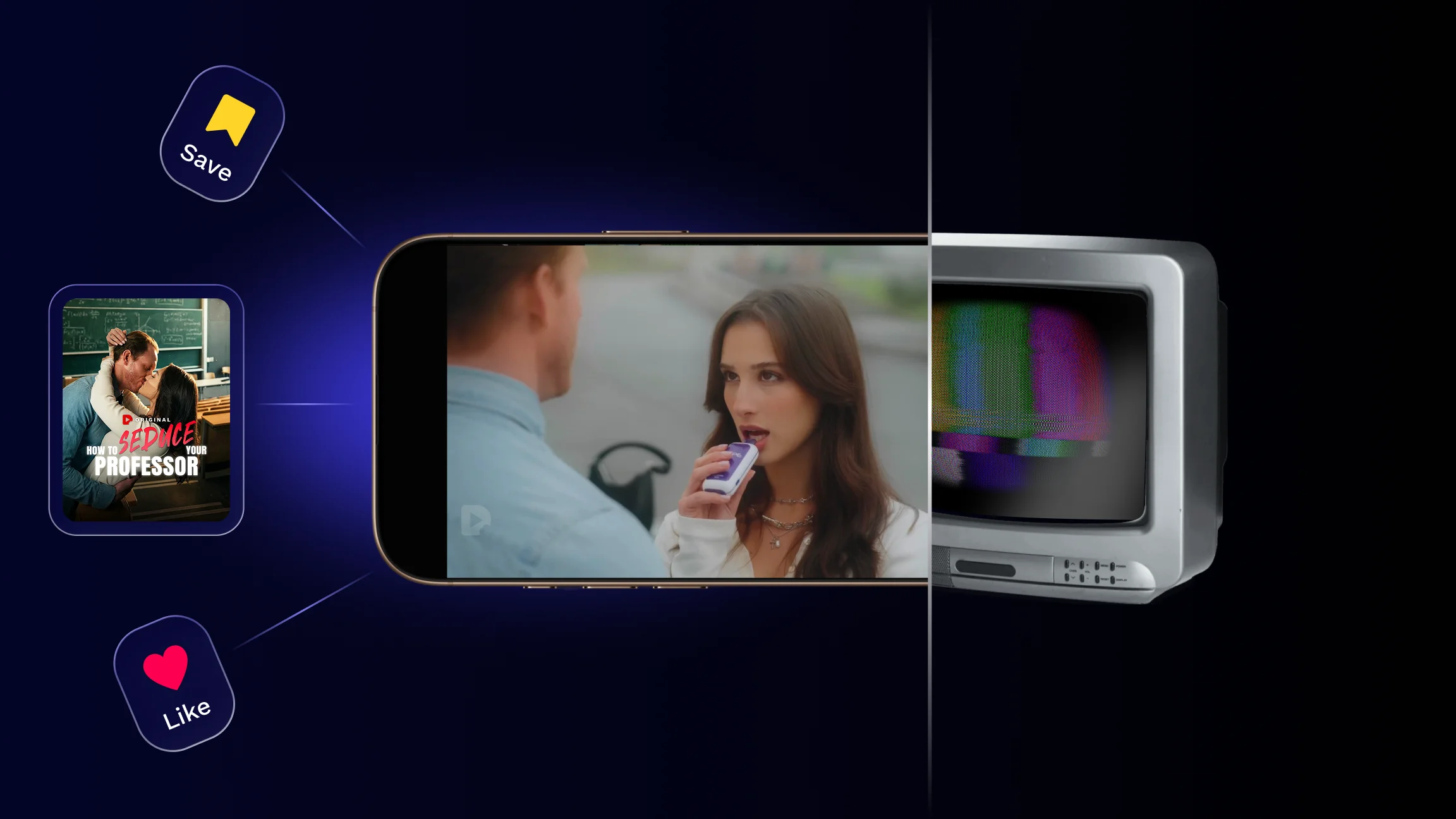
What Is a Vertical Drama?
A vertical drama is a short-form series filmed in a 9:16 portrait format, built primarily for smartphone viewing. Episodes typically run only a few minutes, relying on fast pacing, frequent cliffhangers, and tightly framed character moments to carry each installment forward.
Most vertical dramas keep episodes between one and five minutes, favoring compact scenes over gradual build-up. The vertical frame naturally draws the camera closer to faces and gestures, shifting visual emphasis toward close-up expression rather than wide, layered composition. Serialization plays a central role, with each episode ending on a hook designed to pull attention directly into the next installment. Production for this format tends to favor fast turnaround, streamlined scripts, and editing built specifically for portrait playback.
The format spans several genres, with romance vertical dramas among the most widely watched, alongside revenge, family, and workplace storylines. A title such as Marriage Deal illustrates the format well, compressing a full relationship arc into a series of short, tightly paced episodes.
What Is a Traditional TV Series?
A traditional TV series is a long-form production filmed in a 16:9 horizontal format, with episodes generally lasting thirty to sixty minutes. These series are built for television sets and widescreen streaming platforms, where broader compositions and landscape staging remain standard.
Traditional television supports extended story arcs, layered character development, and multi-episode plotlines that unfold at a slower, more deliberate pace. Production cycles are longer, involving larger crews, higher budgets, and additional development stages to support complex sets, multiple locations, and detailed cinematography. Episodes are typically structured around broadcast or streaming schedules, with clear acts building toward key narrative beats.
Key Differences Between Vertical Drama and Traditional TV
Vertical dramas prioritize short episodes, fast pacing, and mobile first viewing, while traditional TV series focus on longer storytelling, widescreen production, and a more structured episode format. These distinctions shape both how each format is produced and how audiences experience it.
1- Format and Screen Orientation
The most visible difference lies in orientation. Vertical series use a tall, portrait frame designed for phones, while traditional TV relies on a wide, landscape frame suited to larger screens. Portrait framing favors single-subject shots and expressions filling the screen, while landscape framing supports wider shots, group scenes, and expansive settings.
2- Episode Length and Pacing
Vertical episodes generally run one to five minutes, built to establish a hook quickly and close on a reason to continue watching. Pacing stays brisk, with scenes trimmed to essential beats. Traditional TV episodes run thirty to sixty minutes, allowing for slower pacing, subplots, and character development that unfolds across multiple episodes or seasons.
3- Production Speed and Budget
Vertical drama production tends to move quickly, with smaller crews, simpler locations, and shorter shoots that reduce cost and speed up release. Scripts stay lean, with editorial choices centered on maintaining momentum. Traditional TV typically requires longer development timelines, larger crews, and higher budgets to support complex sets and visual effects, resulting in a more polished look but a slower turnaround.
4- Viewing Experience
Vertical dramas are designed for quick, mobile-first viewing that fits into short breaks, commutes, or brief pauses between tasks, centered on fast emotional payoff and easy continuation from one episode to the next. Traditional TV viewing typically assumes a longer, uninterrupted session, where audiences settle into more extended narratives and a gradual emotional build.
Why Vertical Dramas Are Becoming So Popular?
Vertical dramas align closely with existing smartphone habits, offering short entertainment suited to brief pauses throughout the day. The format fits naturally alongside social media consumption patterns, making it easy to discover and continue watching through serialized episodes.
Several factors support this growth: framing built specifically for portrait screens, storytelling structured around frequent cliffhangers, straightforward shareability across platforms, and fast production cycles that allow frequent new releases. Together, these elements make vertical storytelling well suited to audiences seeking a strong narrative beat within a short time frame.
Are Vertical Dramas Replacing Traditional TV?
Vertical dramas are not replacing traditional TV. The two formats operate alongside each other, serving different viewing contexts.
Traditional TV continues to deliver long-form storytelling, layered character studies, and cinematic composition suited to a wide screen. Vertical series address a separate need, offering compact, easily finished stories built for mobile viewing. Many audiences use both formats interchangeably, depending on available time, mood, and device.